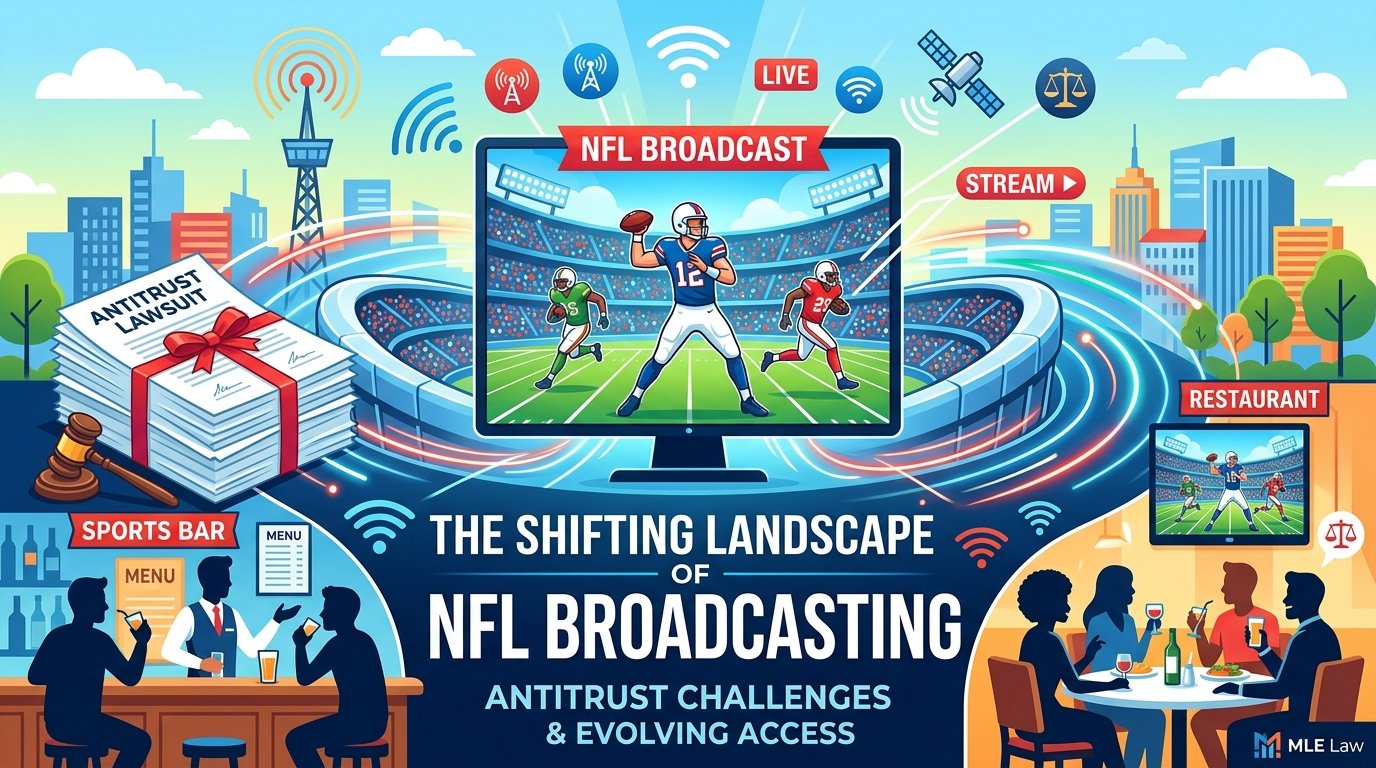
NFL Sunday Ticket Antitrust Lawsuit: What It Means for Fans and Businesses in South Florida
If you’ve ever watched an NFL game at a bar or restaurant in Fort Lauderdale, Miami, or anywhere in Palm Beach County, the NFL Sunday Ticket antitrust lawsuit could directly affect how you watch football going forward. The case centers on whether the NFL’s bundled broadcast package violates federal antitrust law, and a recent appeals court decision has put a massive damages fight back in motion. I’m Michael Elkins, a Fort Lauderdale labor and employment attorney with 25 years of experience, and I’m breaking down what’s actually happened in this case, in plain English.
What is the NFL Sunday Ticket antitrust lawsuit about?
The NFL Sunday Ticket antitrust lawsuit is a class action brought by bars, restaurants, and individual consumers who alleged that the NFL’s practice of bundling all out-of-market games into a single Sunday Ticket package amounted to price collusion. Although the NFL operates as one entity for broadcasting purposes, each team is technically an independent business. The plaintiffs argued that bundling every team’s broadcast rights together, rather than allowing them to compete separately, violates federal antitrust law.
This distinction matters because antitrust law is designed to prevent competitors from joining forces to limit consumer choice and inflate prices. The core legal question in this case is whether packaging all 32 teams’ out-of-market games into one product crossed that line.
Did the NFL lose the Sunday Ticket lawsuit?
Yes. A jury originally found in favor of the plaintiffs and awarded $4.7 billion in damages against the NFL. However, the trial court judge later tossed that verdict, ruling that the plaintiffs’ expert witnesses on damages were not credible and that no expert testimony could support the jury’s award.
The plaintiffs appealed that decision, and the Ninth Circuit Court of Appeals has since reversed the trial judge’s ruling.
What did the Ninth Circuit actually decide?
The Ninth Circuit did not reinstate the original $4.7 billion damages verdict, despite some reports suggesting otherwise. Instead, the appeals court ruled that the trial judge overstepped by deciding, on his own, that the plaintiffs’ expert witnesses lacked credibility. According to the Ninth Circuit, credibility determinations are the jury’s job, not the judge’s.
As a result, the Ninth Circuit sent the case back down for a new trial limited to the issue of damages. The liability finding, meaning the determination that the NFL’s Sunday Ticket bundling violated antitrust law, remains intact. Only the dollar amount owed will be retried.
How much could the NFL be forced to pay?
That remains an open question. The case involves roughly 48,000 bars, restaurants, and other businesses as part of the certified class, according to reporting on the case. Under federal antitrust law, damages in cases like this can also be tripled, which means the financial exposure for the NFL could be significant depending on how the new trial unfolds.
Whether a new jury awards another multibillion-dollar verdict, a smaller figure, or whether the NFL opts to settle before trial, is something we’ll be watching closely in the months ahead.
Could this change how fans and bars watch NFL games?
Potentially, yes. Because the liability finding, the conclusion that the NFL’s Sunday Ticket bundling violated antitrust law, still stands, a significant damages verdict could pressure the NFL to restructure how it packages and distributes its broadcast rights. That could affect:
- Individual consumers who subscribe to Sunday Ticket at home
- Bars and restaurants in South Florida that pay for commercial packages to show out-of-market games
- Pricing and bundling structures for future broadcast rights deals
For bar and restaurant owners in Fort Lauderdale, Miami, and across South Florida, this case is worth monitoring closely, since any changes to NFL broadcast distribution could directly affect operating costs and customer experience.
Watch my breakdown of the NFL Sunday Ticket case
For a quick video explanation of this case, watch my short breakdown here:
https://youtube.com/shorts/6Oae0y-j0aE?si=MKMEl7S8FxIjvE2r
Frequently Asked Questions
Is the NFL Sunday Ticket lawsuit over?
No. While the Ninth Circuit’s ruling resolved the question of whether the trial judge properly tossed the original verdict, the case now heads back to the trial court for a new trial solely on the issue of damages. The underlying liability finding against the NFL stands.
Does this lawsuit affect my current Sunday Ticket subscription?
Not immediately. There are currently no changes to how Sunday Ticket is sold or priced for individual subscribers or businesses. Any changes would likely follow the outcome of the new damages trial or a potential settlement.
Who is included in the NFL Sunday Ticket class action?
The class includes individual consumers and commercial establishments, such as bars and restaurants, that purchased the NFL Sunday Ticket package during the relevant time period covered by the lawsuit.
Why does it matter that the trial judge can’t decide expert witness credibility?
Under the law, juries, not judges, are responsible for weighing the credibility of witnesses, including expert witnesses. The Ninth Circuit’s ruling reinforces this principle and is part of why the case is heading back for a new trial rather than simply ending.
Questions About Business and Employment Law in South Florida?
Antitrust rulings like this one show how quickly the legal landscape can shift for businesses, from bars and restaurants to corporate broadcast partners. If your South Florida business has questions about compliance, litigation exposure, or how industry rulings like this one could affect your operations, my team at MLE Law is here to help.
Visit mlelawfirm.com to schedule a consultation with our Fort Lauderdale-based legal team today.